Skip to content
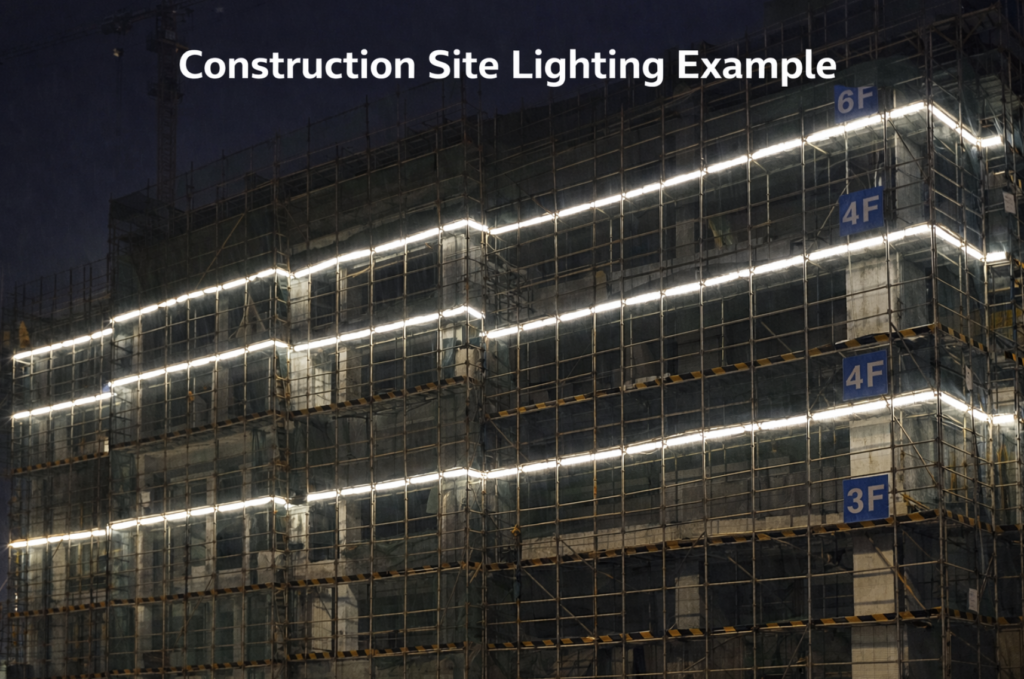
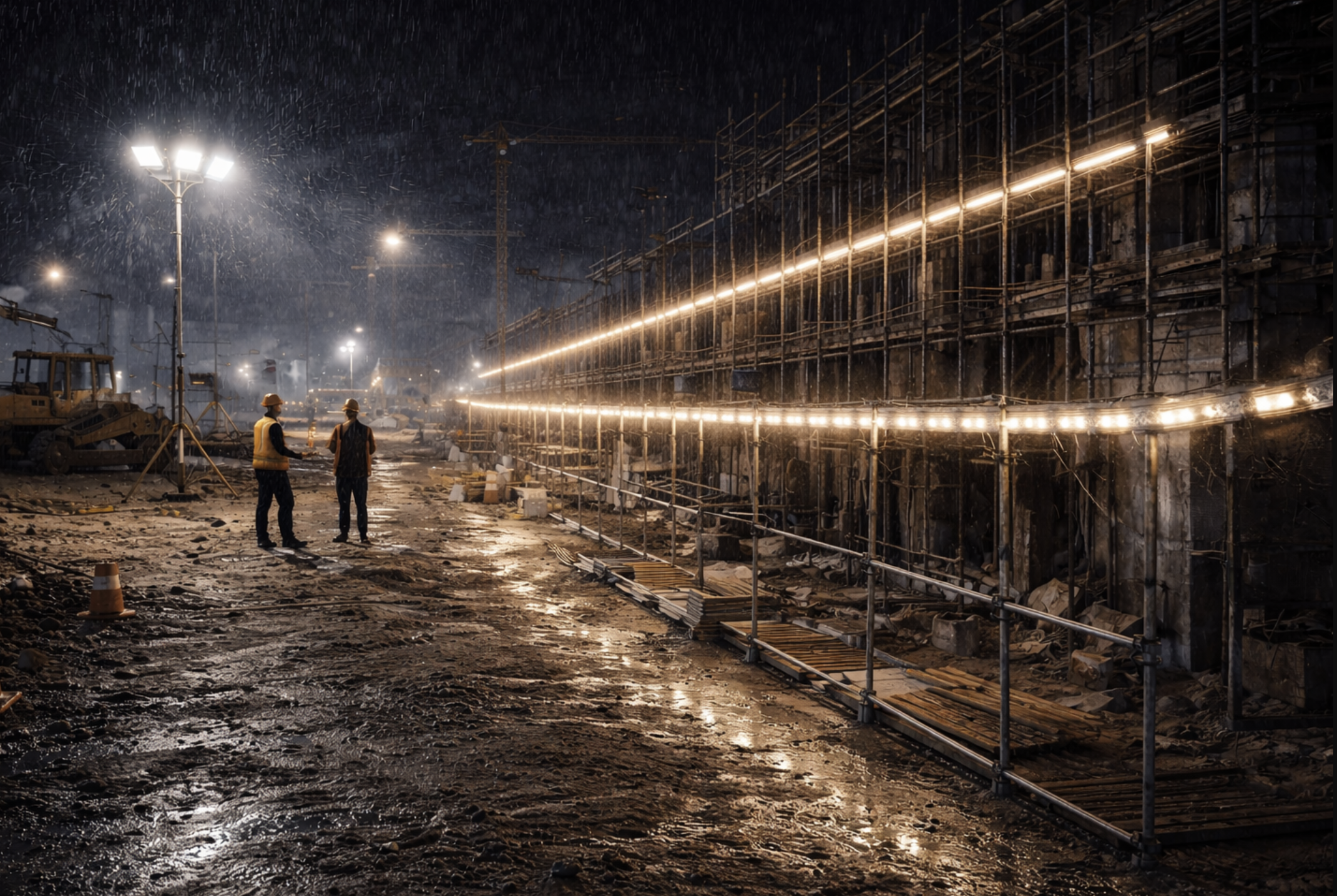
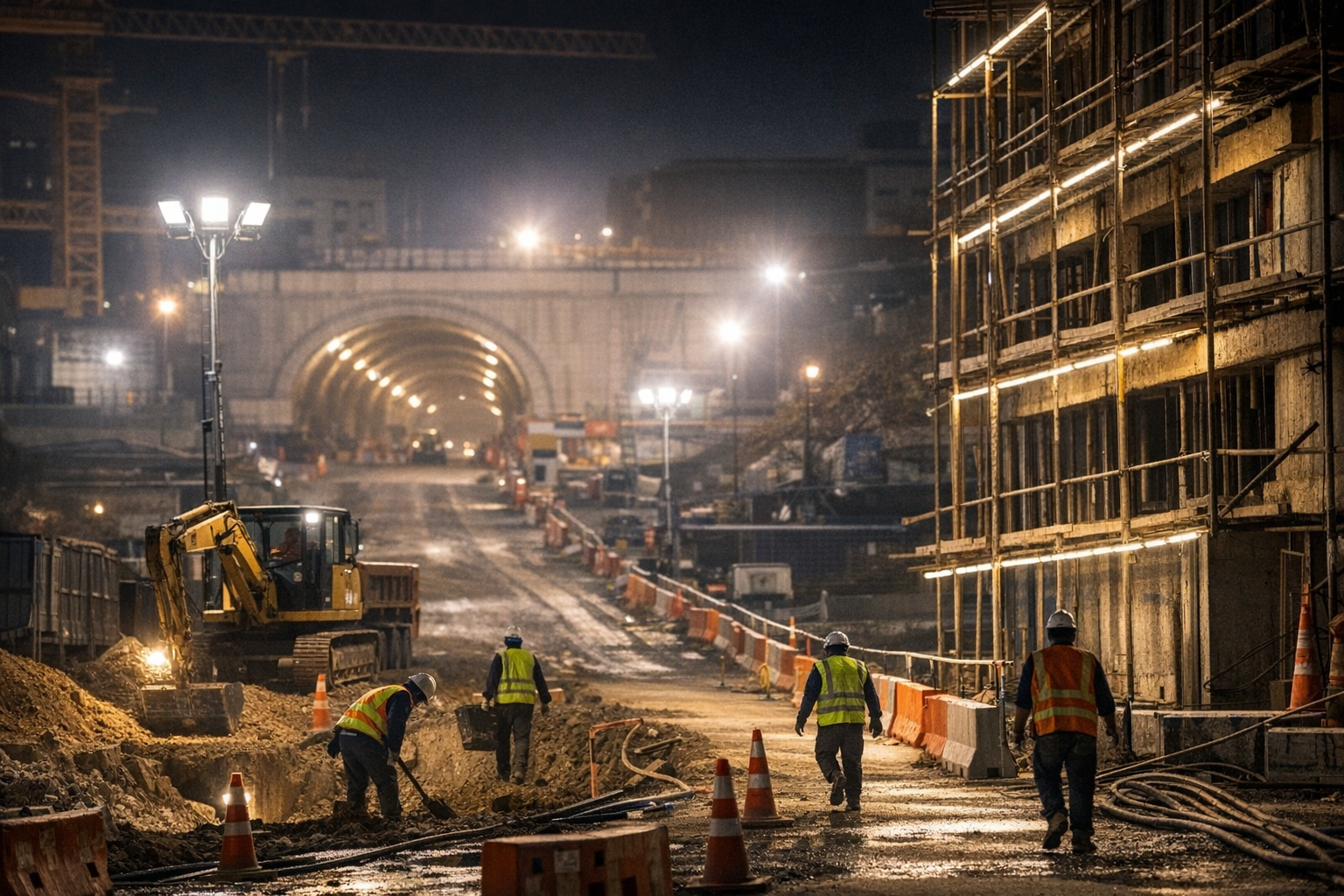
Temporary lighting is essential on construction sites, especially when work continues at night or in poorly lit areas such as scaffolding, tunnels, and building interiors. Many contractors choose high voltage LED strip lights (110V / 220V) because they are easy to install, energy-efficient, and capable of lighting large areas with minimal wiring.
Unlike low-voltage lighting systems that require drivers and complex wiring, high voltage LED strips can be installed quickly using a simple plug-and-play setup. In this guide, we explain how to install high voltage LED strip lights safely and efficiently on construction sites.
Why High Voltage LED Strip Lights Are Ideal for Construction Lighting
High voltage LED strips are widely used in temporary construction lighting because they offer several key advantages:
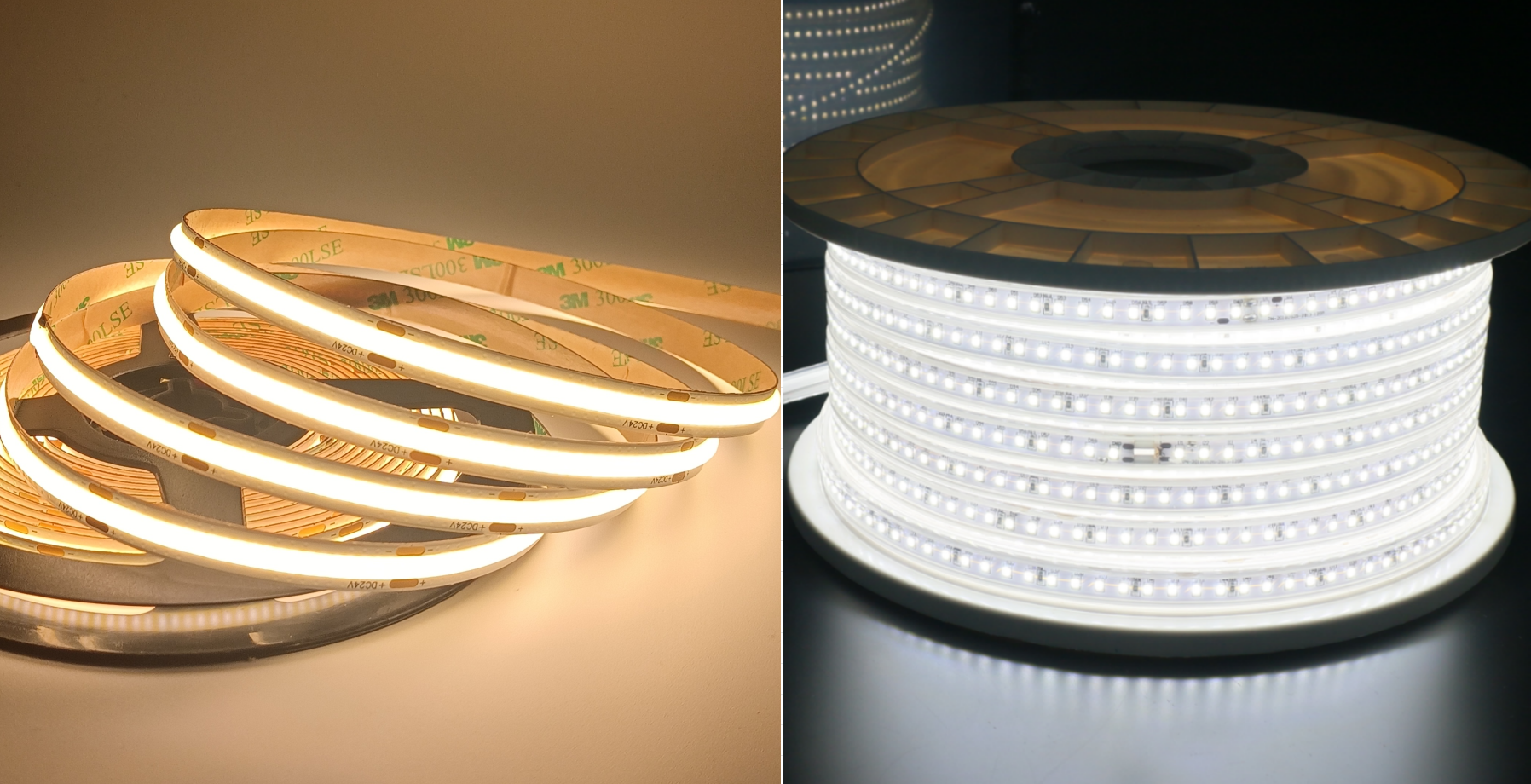
Long run capability — up to 50 meters continuous lighting without voltage drop
No LED driver required — direct connection to AC power
Fast installation — plug-and-play design
Flexible mounting — suitable for scaffolding, walls, tunnels, and temporary structures
Cost-effective lighting solution for large job sites
Because of these benefits, many contractors prefer 110V or 220V LED strip lights over traditional floodlights for temporary site illumination.
You can also explore our professional 110V 220V LED Strip Light designed specifically for long-run construction lighting applications.
Method 1 – Install Without Cutting (Recommended)
In most construction lighting projects, high voltage LED strips do not need to be cut.
High voltage LED strips are typically supplied in 10m, 25m, or 50m reels, allowing installers to choose a length that closely matches the required lighting distance.
For example:
10m reels – small construction areas
25m reels – corridors or building interiors
50m reels – large scaffolding structures
Installation becomes extremely simple:
Unroll the LED strip from the reel
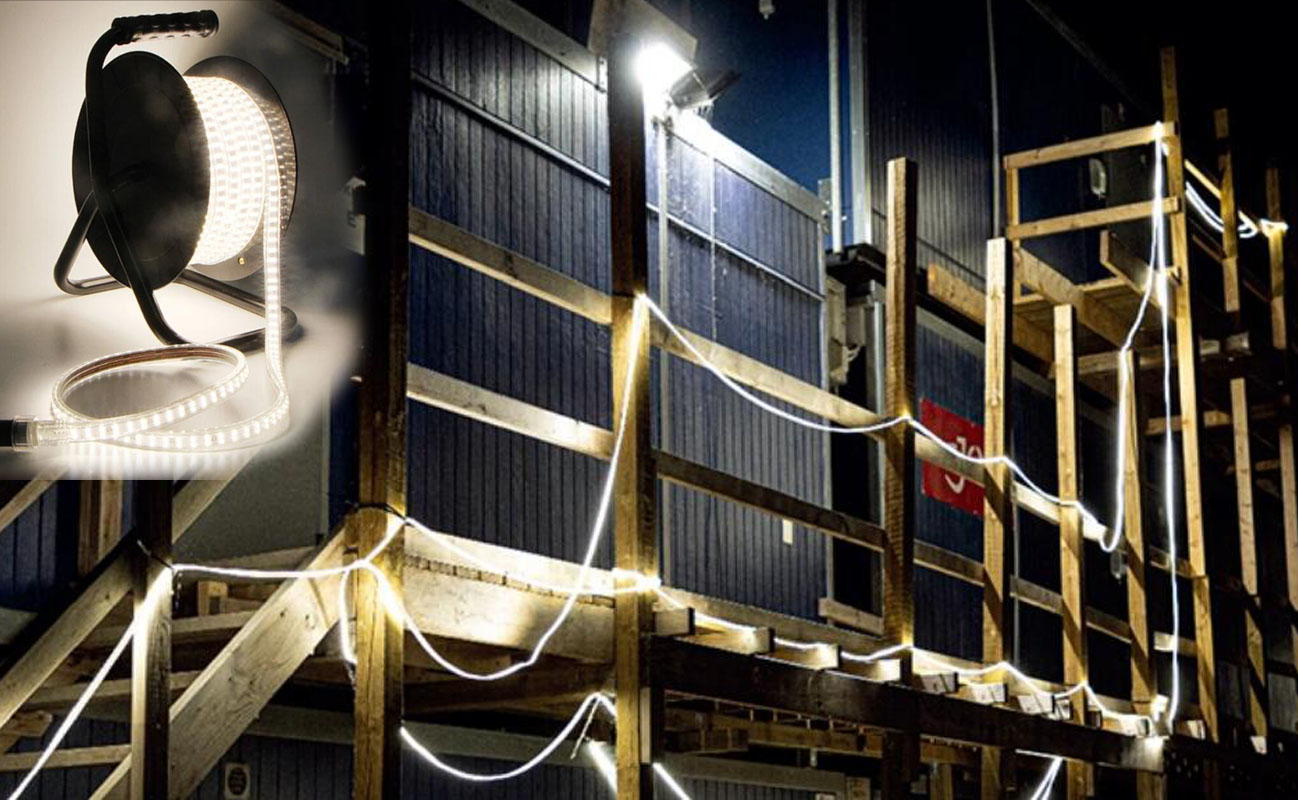
Fix the strip along the scaffold, wall, or structure
Connect the rectifier power plug
Plug into AC power
This plug-and-play installation is one of the biggest advantages of high voltage LED strip lighting for construction sites.
Method 2 – Cutting the LED Strip When Necessary
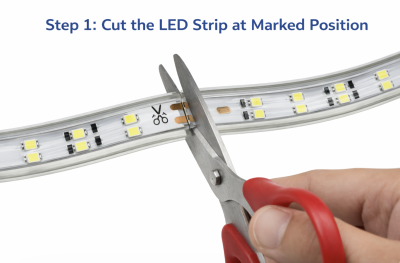
If the required lighting length is significantly shorter than the reel length, the LED strip can be cut at the marked cutting points.
However, cutting requires additional work to maintain safety and waterproof protection.
Typical steps include:
Cut the strip at the marked cutting line
Install the rectifier power plug
Seal the connection with silicone glue
Install a waterproof end cap
Allow the silicone sealant to cure before powering on
Because waterproof sealing is required, cutting should only be done when necessary.
Step-by-Step Installation Guide
Below is a simple step-by-step process for installing high voltage LED strip lighting.
Step 1 – Choose the Correct Strip Length
Select the strip length according to the lighting area. For most construction projects, 25m or 50m reels are the most practical.
Step 2 – Connect the Rectifier Power Plug
Insert the rectifier plug into the LED strip connector. This component converts AC power to the correct current for the LEDs.
Step 3 – Seal the Connection (If the Strip Is Cut)
Apply waterproof silicone glue and install an end cap to ensure the connection remains waterproof and safe.
Step 4 – Fix the LED Strip to the Structure
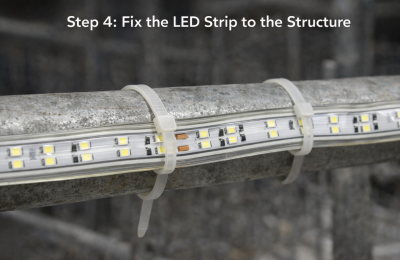
Use cable ties, clips, or mounting brackets to fix the LED strip along:
scaffolding frames
metal structures
ceilings or walls
temporary site fencing
Proper fixing prevents the strip from moving or sagging.
Step 5 – Connect to the AC Power Supply
Plug the LED strip into a standard 110V or 220V power outlet. Once powered, the strip will illuminate immediately.
Safety Tips for Construction Site Lighting
When installing LED strip lights on construction sites, always follow these safety recommendations:
Ensure the LED strip has IP65 or higher waterproof rating
Avoid excessive bending or twisting of the strip
Secure the strip firmly to prevent accidental damage
Keep power connections away from standing water
Use certified electrical components
Proper installation ensures reliable performance even in harsh construction environments.
High Voltage LED Strip vs Floodlights for Construction Sites
High Voltage LED Strip vs Floodlights for Construction Sites:
| Feature | LED Floodlights | High Voltage LED Strips |
|---|---|---|
| Installation speed | Medium | Very fast |
| Lighting coverage | Spot lighting | Continuous lighting |
| Energy efficiency | Medium | High |
| Wiring complexity | Moderate | Very simple |
| Ideal application | Ideal application | Scaffolding / tunnels / corridors |
For many temporary lighting setups, high voltage LED strip lights provide more uniform and flexible illumination.
Conclusion
High voltage LED strip lights provide one of the fastest and most efficient lighting solutions for construction sites. With long continuous runs, plug-and-play installation, and flexible mounting options, they are ideal for scaffolding, building interiors, tunnels, and temporary work areas.
By choosing the correct strip length and following proper installation practices, contractors can quickly create safe and well-lit working environments.
If you are looking for professional construction lighting solutions, explore our 110V 220V LED Strip Light designed for reliable long-distance illumination on job sites.