Skip to content
Construction sites demand lighting systems that are scalable, durable, and easy to install. When selecting LED strip lighting for temporary jobsite use, one of the most important decisions is choosing between high voltage (110V / 220V AC) and low voltage (12V / 24V DC) systems.
Both technologies have advantages. However, their suitability depends on installation distance, environmental conditions, and project duration.
This guide explains the practical differences to help contractors and project managers make an informed decision.
Comparison Overview
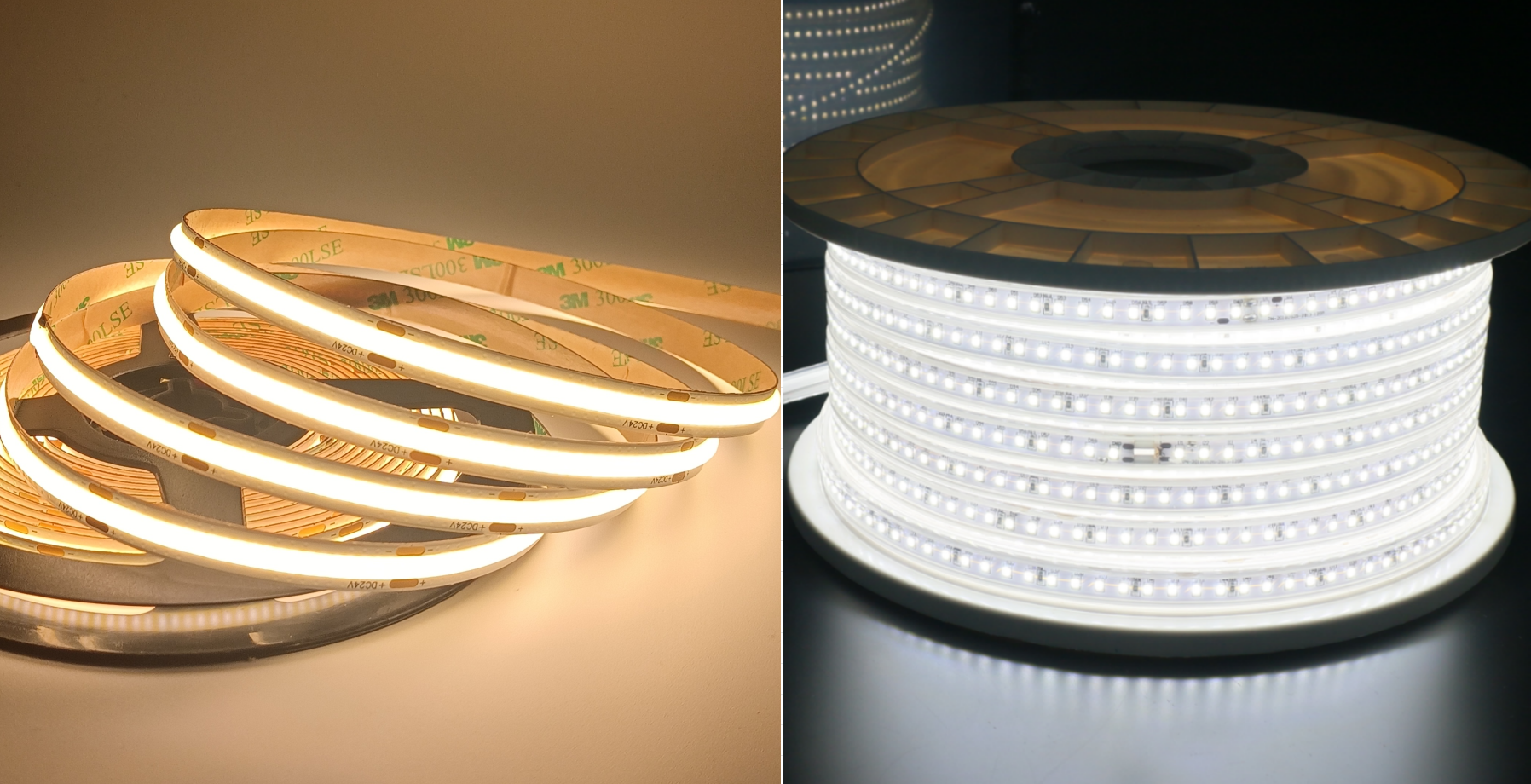
| Feature | High Voltage (110V/220V AC) | Low Voltage (12V/24V DC) |
|---|---|---|
| Power Supply | Direct AC input | Requires external driver |
| Maximum Continuous Run | Long runs supported | Shorter runs before power injection |
| Installation Complexity | Lower for large areas | Higher for large installations |
| Voltage Drop | Minimal over longer distances | More noticeable over distance |
| Typical Application | Large construction sites | Small decorative or indoor projects |
| Outdoor Scalability | Strong | Moderate |
For large-scale temporary construction lighting systems, high voltage configurations are often more efficient.
1. Installation Complexity and Power Distribution
Low Voltage LED Strip (12V / 24V DC)
Low voltage systems require:
External LED drivers
Multiple power injection points
Additional wiring for long runs
In construction environments exceeding 5–10 meters per section, voltage drop becomes noticeable unless additional power feeds are added.
This increases installation complexity and labor cost.
High Voltage LED Strip (110V / 220V AC)
High voltage systems:
Connect directly to AC power
Eliminate external drivers
Support longer continuous runs
Require fewer connection points
For temporary construction sites, simplified wiring reduces setup time and minimizes potential failure points.
👉 Learn more about
high voltage LED strip lighting for construction sites
2. Voltage Drop in Large Construction Areas
Voltage drop is one of the most critical factors in jobsite lighting design.
Low voltage LED strips are ideal for short installations but may require power injection every few meters for longer runs.
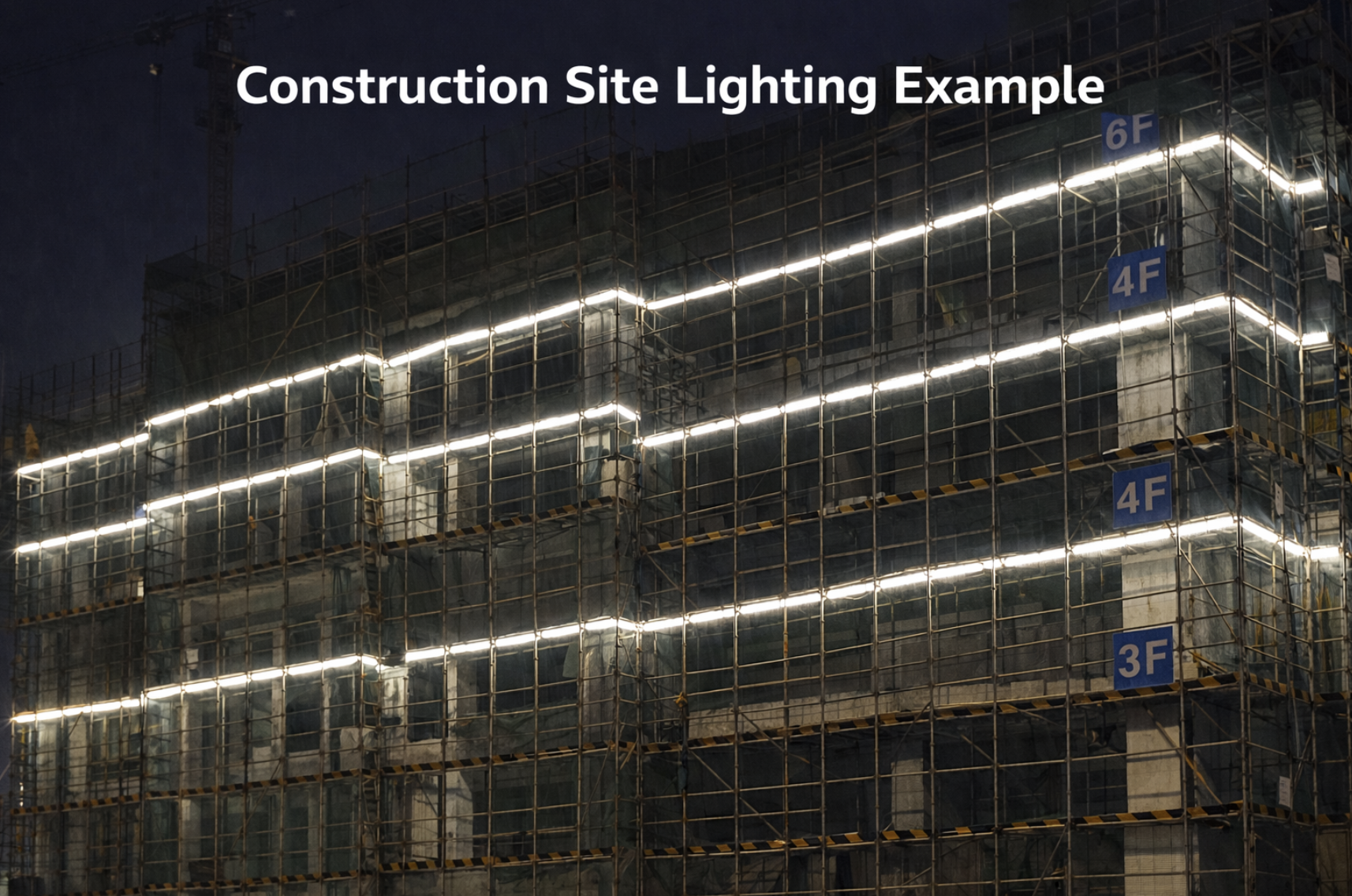
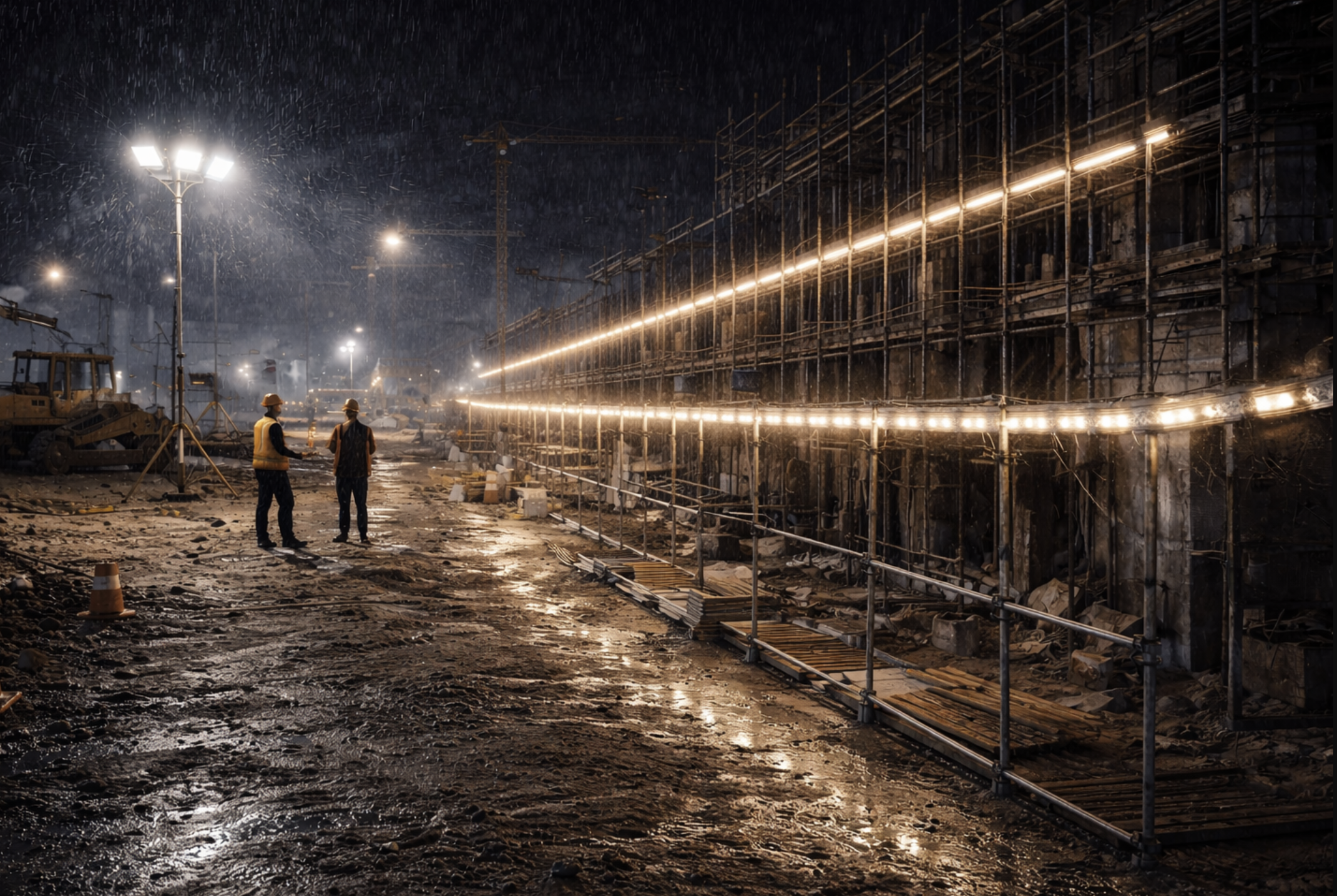
High voltage LED strip systems are engineered to support extended linear installations, often covering long scaffolding sections, tunnels, or perimeter fencing without significant brightness loss.
In infrastructure projects exceeding 30–50 meters of lighting length, high voltage systems typically offer greater scalability.
3. Outdoor Performance and Environmental Exposure
Construction sites are exposed to:
Rain and moisture
Dust and debris
Temperature variation
Mechanical vibration
Both high and low voltage LED strips can be waterproof (IP65/IP67). However, low voltage systems require additional protection for external drivers.
High voltage waterproof LED strip systems:
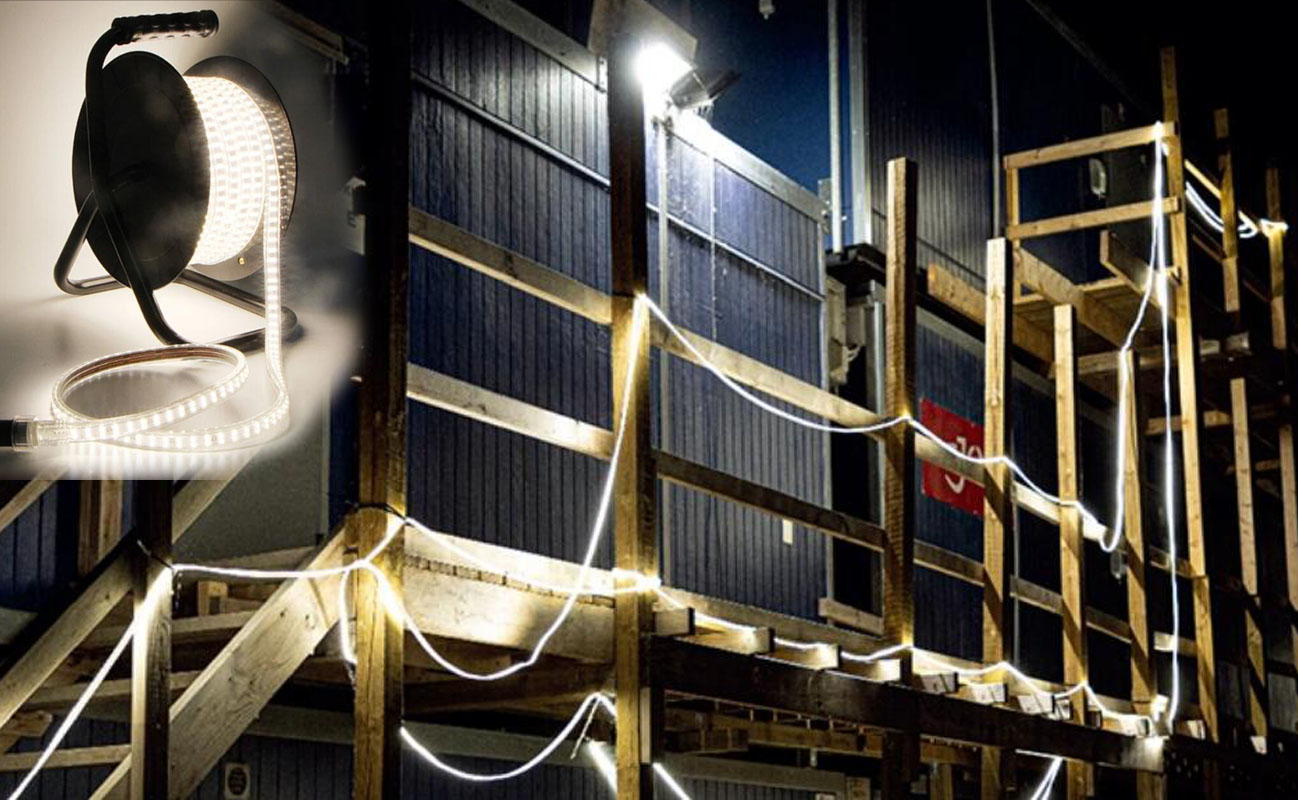
Simplify outdoor installation
Reduce exposed components
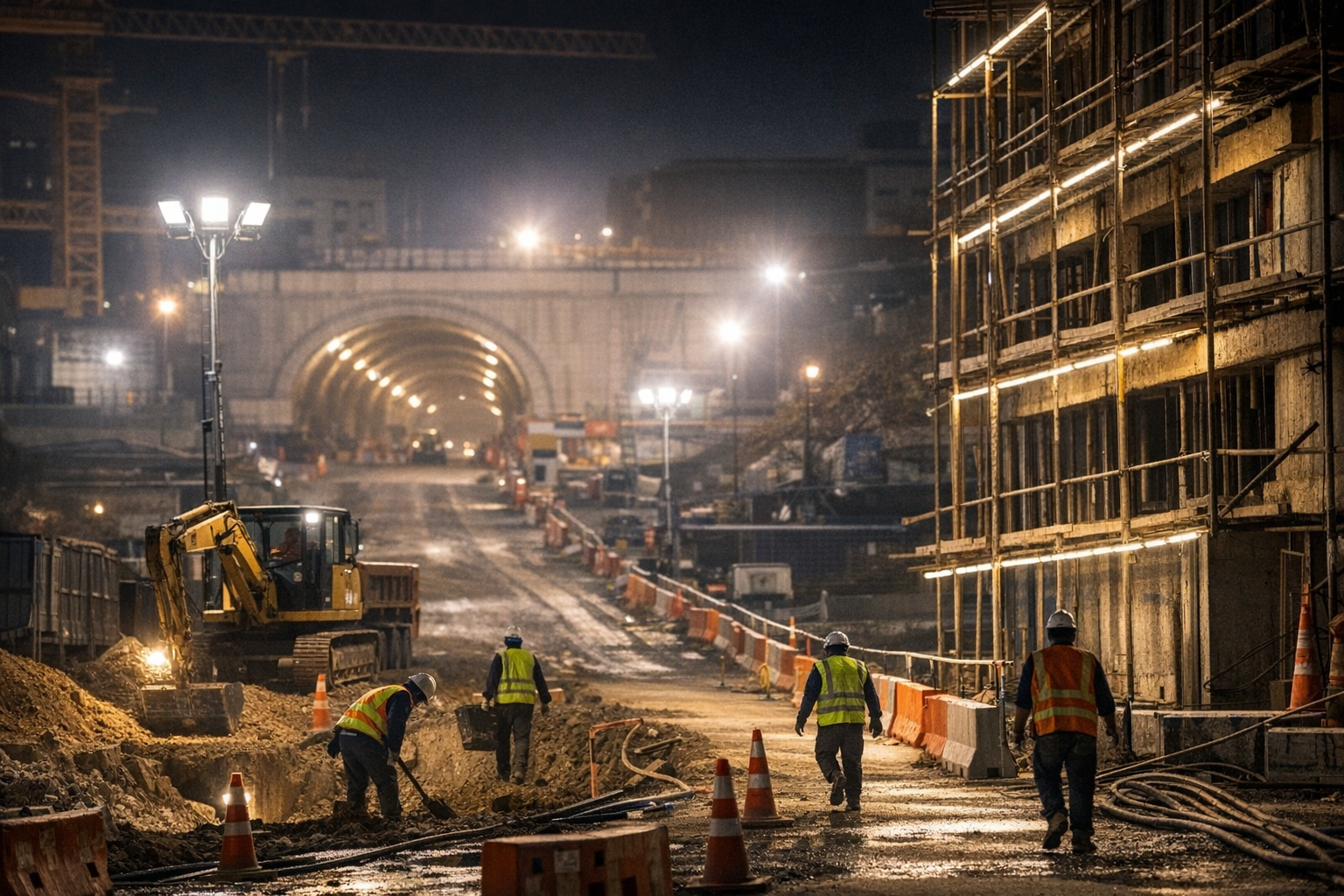
Support temporary outdoor construction lighting more efficiently
For large outdoor jobsite lighting systems, simplified power architecture is often advantageous.
4. Safety Considerations
Low voltage systems are commonly perceived as safer due to lower electrical shock risk. However, in construction environments, safety depends on:
Proper insulation
Waterproof connectors
Cable management
Compliance with local electrical standards
High voltage LED strip lighting must be installed according to AC wiring regulations and handled by qualified personnel.
When properly installed, both systems can meet safety requirements. The decision should consider installation complexity and scale rather than voltage level alone.
5. Cost Efficiency for Temporary Construction Projects
Low voltage systems:
Lower strip cost per meter
Higher driver and accessory cost
Increased installation time for large areas
High voltage systems:
Slightly higher strip cost
Fewer accessories required
Faster deployment
Reduced labor cost
For temporary construction lighting systems where installation speed is critical, high voltage LED strip lighting often provides better overall cost efficiency.
Real-World Construction Scenario
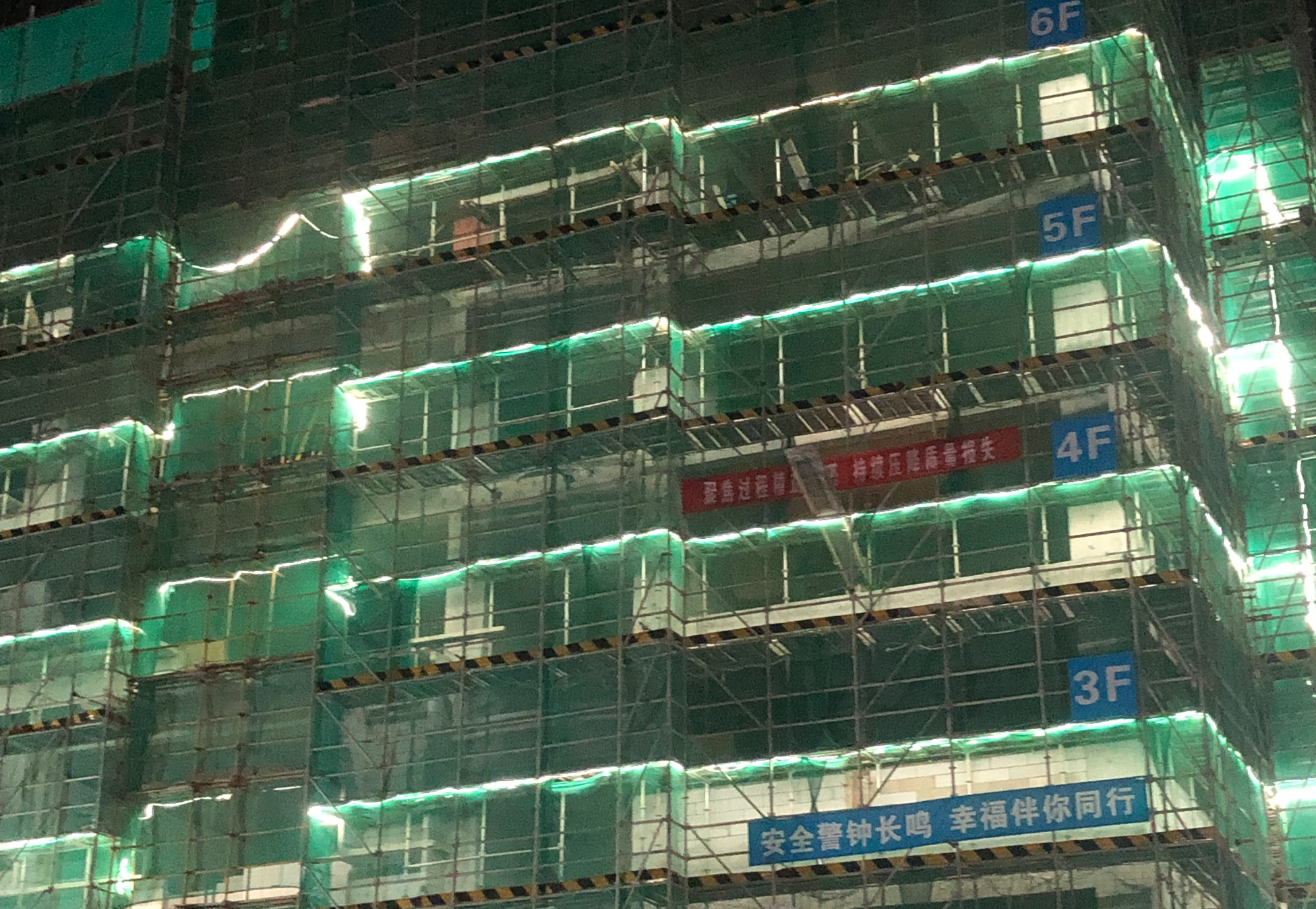
Consider a 60-meter scaffolding installation requiring continuous illumination.
A low voltage LED strip system would typically require multiple drivers and power injection points along the structure. This increases wiring complexity and installation time.
A high voltage LED strip system can complete the installation with significantly fewer connection points, simplifying deployment and reducing labor hours.
For large temporary jobsite lighting projects, this efficiency difference becomes substantial.
When Should You Choose Each System?
Choose Low Voltage LED Strip If:
The installation area is small
Lighting is decorative or semi-permanent
Frequent access to drivers is manageable
Choose High Voltage LED Strip If:
The construction site is large
Long-distance continuous lighting is required
Temporary outdoor installation is needed
Faster deployment is a priority
For many infrastructure and large-scale construction projects, high voltage LED strip lighting offers greater scalability and practical advantages.
👉 Explore our
110V / 220V LED strip solutions for construction projects
Conclusion
High voltage and low voltage LED strip systems each serve specific applications. However, in construction environments where installation speed, scalability, and long-distance coverage are critical, high voltage LED strip lighting often provides a more efficient solution.
Before selecting a lighting system, evaluate installation length, environmental exposure, and project duration to determine the most appropriate configuration.