Skip to content
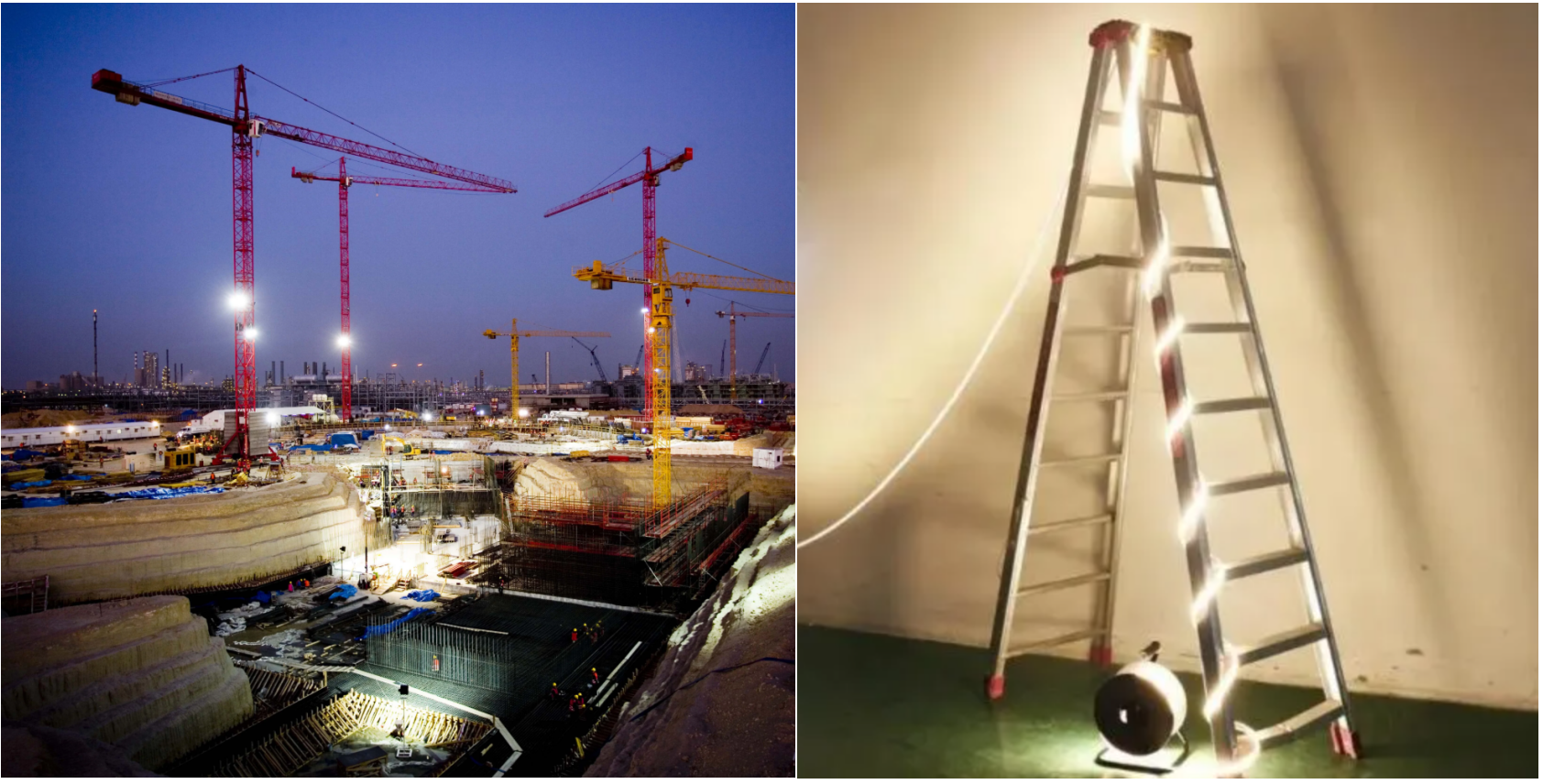
Construction sites require reliable and flexible lighting, especially for night operations and temporary installations. Traditionally, flood lights have been the most common solution for jobsite illumination. However, more contractors are now considering high voltage LED strip lighting (110V / 220V AC) as an alternative for construction and infrastructure projects.
So which option is better for your construction site?
The answer depends on the size of the area, installation requirements, and project duration.
1. Installation Speed and Flexibility
Flood lights typically require stable mounting positions, brackets, and multiple power connection points. For large construction areas, this often means more wiring, more setup time, and more labor.
High voltage LED strip lighting offers a different approach:
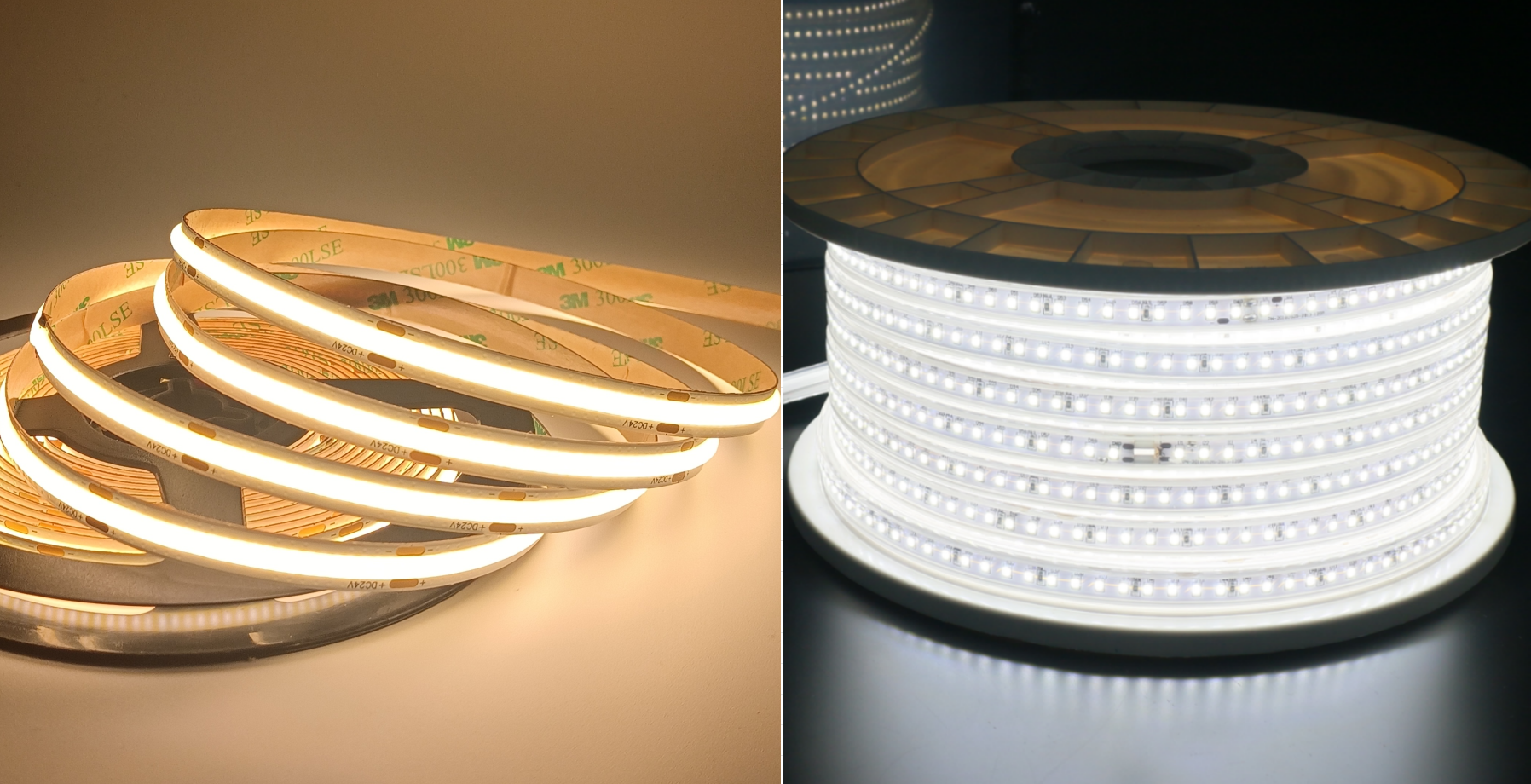
Direct 110V / 220V AC input
Fewer power supply points
Long continuous runs
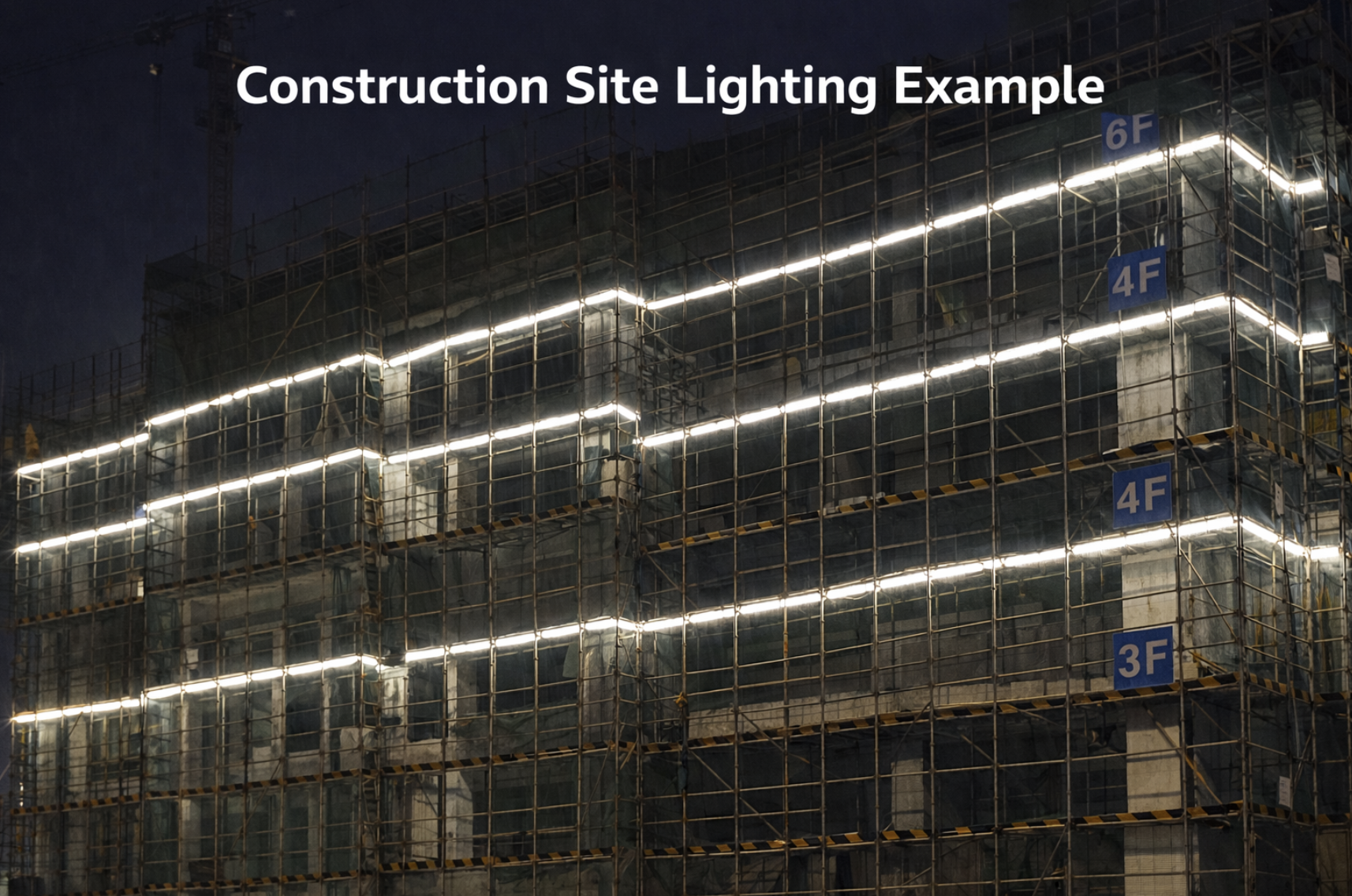
Flexible mounting on scaffolding, fences, tunnels, and structural frames
For temporary projects where speed matters, installation efficiency can significantly reduce overall project costs.
For larger jobsite applications, contractors often prefer
high voltage LED strip lighting for construction sites
2. Light Coverage and Uniformity
Flood lights provide strong spot illumination. They are ideal for focused lighting but often create uneven brightness and shadow areas.
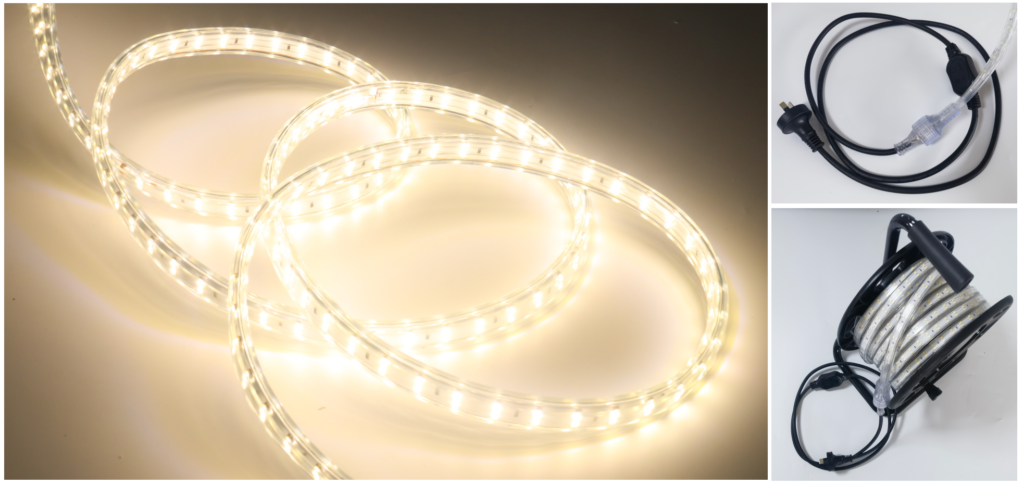
High voltage LED strip lighting provides:
Continuous linear illumination
More uniform brightness along long surfaces
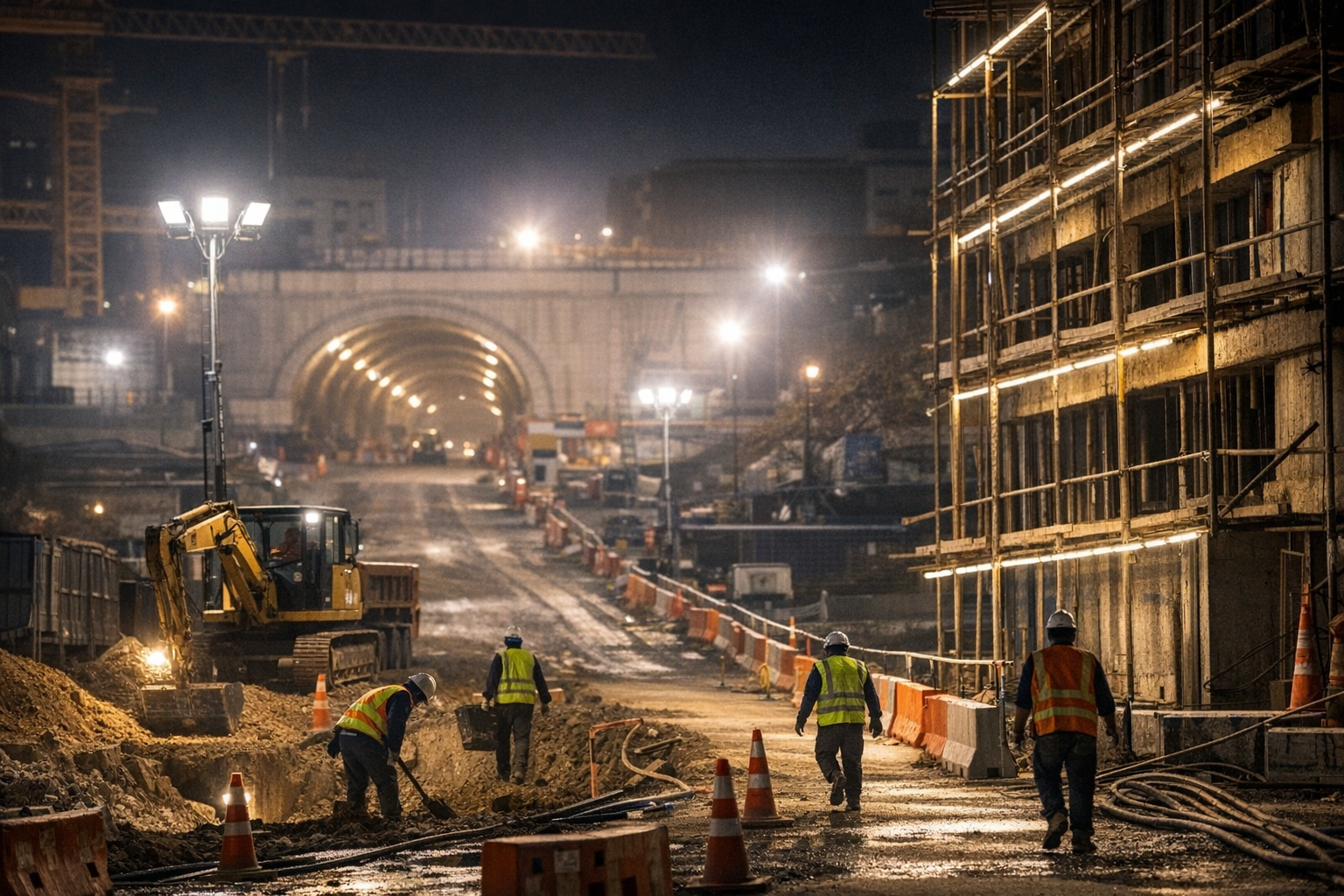
Reduced dark zones in tunnels and corridors
Better visibility along scaffolding and perimeters
For road construction, bridge projects, and tunnel works, continuous lighting is often more practical than isolated spot lights.
3. Power Supply and Voltage Drop
In large construction environments, voltage drop and wiring complexity can become major challenges.
Low-voltage lighting systems require multiple drivers and frequent power distribution points.
High voltage LED strip lighting systems:
Support longer continuous runs
Reduce the number of drivers required
Simplify overall wiring on site
This makes them especially suitable for temporary construction lighting and infrastructure projects that require scalability.
4. Outdoor Durability and Safety
Flood lights are often heavy and require stable mounting structures.
High voltage LED strips are:
Lightweight and flexible
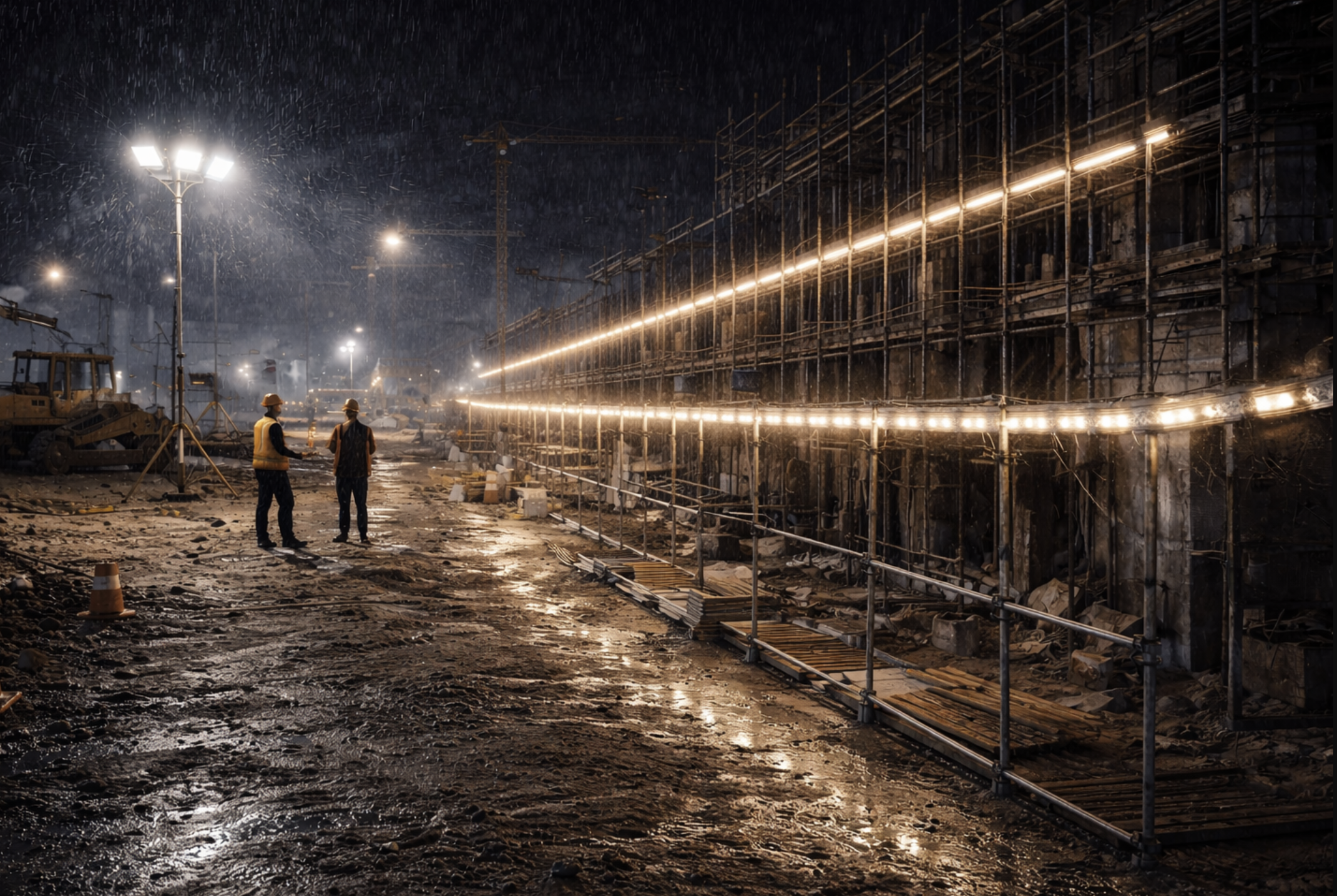
Available with IP65 or IP67 waterproof protection
Suitable for outdoor and semi-permanent installation
Easier to relocate as project needs change
For outdoor construction sites exposed to rain and dust, waterproof LED strip lighting can provide adaptable and safer installation options.
Learn more about
👉 110V / 220V LED strip lighting for construction applications
5. Cost Efficiency for Temporary Projects
Flood lights can be effective, but large sites often require many units to achieve sufficient coverage.
High voltage LED strip lighting:
Covers longer areas with fewer units
Reduces installation labor
Lowers temporary setup costs
Improves lighting consistency across the site
For contractors managing infrastructure and long-term construction projects, total cost efficiency is often more important than peak brightness in a single area.
When Should You Choose Each Option?
Choose Flood Lights If:
You need concentrated high-intensity lighting
The work area is small
You require adjustable directional beams
Choose High Voltage LED Strip Lighting If:
You need long-distance continuous illumination
The site is large or linear
Fast installation is required
The lighting is temporary and outdoors
For many large-scale construction and infrastructure projects,
high voltage LED strip lighting is often the more scalable and practical solution.
👉 Explore our dedicated
construction site LED strip lighting solutions
Conclusion
Both flood lights and LED strip work lights have their place on construction sites.
However, when the project requires continuous coverage, simplified wiring, and fast deployment, high voltage LED strip lighting offers clear advantages in many real-world construction scenarios.
Before finalizing your temporary lighting setup, evaluate the scale of your site and the duration of the project. In many cases, a high voltage LED strip solution can provide better efficiency and lower long-term costs.